
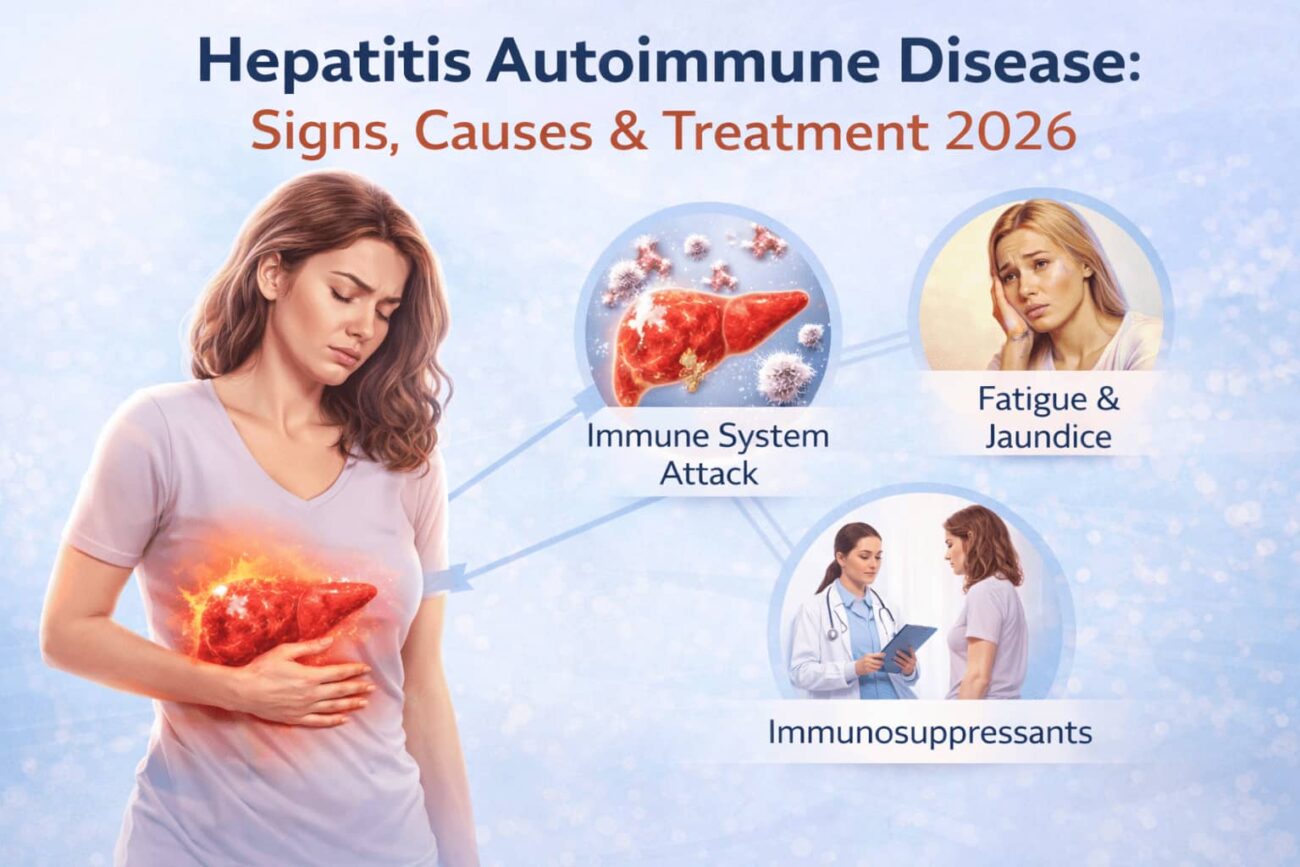
Hepatitis Autoimmune Disease and Non-Alcoholic Fatty Liver Disease: What You Need to Know
If you’ve recently been told your liver enzymes are elevated, or you’ve been searching for answers about why your body seems to be fighting itself, you’re in the right place. This guide breaks down both conditions in clear, honest language — what causes them, how they’re diagnosed, how they’re treated, and what you can actually do about them today.
Understanding the difference between these two conditions is not just academic — it changes treatment completely. Getting it wrong can mean years of the wrong therapy, or worse, accelerating liver damage. Let’s get into it.
What Is Hepatitis Autoimmune Disease?
Hepatitis autoimmune disease, clinically called autoimmune hepatitis (AIH), is a chronic liver disease in which the body’s immune system mistakenly attacks healthy liver cells. Instead of protecting the liver from actual threats, immune cells treat the liver as foreign tissue and wage a continuous inflammatory assault against it.
Unlike viral hepatitis — which is caused by a pathogen — autoimmune hepatitis has no infectious origin. It is not contagious. The trigger is the immune system itself, which makes it both harder to identify and more complex to treat.
Quick Answer: What is autoimmune hepatitis?
Autoimmune hepatitis is a condition where the immune system attacks the liver’s own cells, causing ongoing inflammation, scarring, and potential liver failure if untreated. It is not caused by a virus or alcohol. It is managed with immunosuppressive medications, typically for life.
Who Gets Autoimmune Hepatitis?
Autoimmune hepatitis can affect anyone, but it is significantly more common in women — accounting for roughly 70–80% of all diagnosed cases. It has two peak onset periods: one in childhood or adolescence, and another between ages 40–60. However, it can develop at any age.
It is also more common in people who already have other autoimmune conditions. If you have thyroid disease, rheumatoid arthritis, Type 1 diabetes, or celiac disease, your risk of developing autoimmune hepatitis is higher than average.
Types of Autoimmune Hepatitis
- Type 1 (most common): Affects all ages; characterized by anti-smooth muscle antibodies (ASMA) and ANA markers. Can present at any life stage.
- Type 2 (less common): Predominantly affects children and young women; linked to anti-LKM1 antibodies. Often more aggressive in progression.
What Is Non-Alcoholic Fatty Liver Disease (NAFLD)?
Non-alcoholic fatty liver disease is the umbrella term for a range of conditions caused by excess fat accumulation in the liver — in people who drink little or no alcohol. It is now the most common chronic liver disease in the world, affecting an estimated 25–30% of the global adult population.
NAFLD sits on a spectrum. At its mildest, it’s simple steatosis — fat in the liver with no serious damage. At its most severe, it progresses to non-alcoholic steatohepatitis (NASH), which involves inflammation, cell damage, and scarring (fibrosis). From there, it can advance to cirrhosis and liver failure.
Quick Answer: What is non-alcoholic fatty liver disease?
Non-alcoholic fatty liver disease (NAFLD) is the buildup of excess fat in liver cells in people who don’t drink heavily. It ranges from harmless fat accumulation to severe liver inflammation and scarring. It is closely linked to obesity, Type 2 diabetes, high cholesterol, and metabolic syndrome.
Who Is Most at Risk for NAFLD?
NAFLD is deeply tied to metabolic health. The key risk factors include:
- Obesity, especially abdominal fat
- Type 2 diabetes or insulin resistance
- High triglycerides or low HDL (“good”) cholesterol
- High blood pressure
- Metabolic syndrome (a cluster of the above)
- Rapid weight loss or malnutrition
- Certain medications (including corticosteroids, tamoxifen, and some antipsychotics)
Unlike autoimmune hepatitis, NAFLD does not have a strong gender bias — though hormonal changes in postmenopausal women can increase their risk. It is increasingly common in children and adolescents due to rising rates of childhood obesity.
Key Differences Between Hepatitis Autoimmune Disease and NAFLD
These two liver diseases can look similar on surface testing — both can cause elevated liver enzymes, fatigue, and vague abdominal discomfort. But their causes, mechanisms, and treatments are completely different.
| Feature | Autoimmune Hepatitis | Non-Alcoholic Fatty Liver Disease |
|---|---|---|
| Cause | Immune system attacks liver cells | Excess fat accumulation from metabolic dysfunction |
| Primarily affects | Women aged 15–40 and 40–60 | Adults with obesity, diabetes, or metabolic syndrome |
| Diagnosis | Autoantibodies, liver biopsy, elevated IgG | Imaging (ultrasound, MRI), liver biopsy, blood tests |
| Treatment | Immunosuppressants (prednisone, azathioprine) | Lifestyle change, weight loss, metabolic management |
| Contagious? | No | No |
| Reversible? | Manageable; rarely fully reversible without treatment | Early stages often fully reversible with lifestyle change |
| Link to alcohol | None | Not alcohol-related, but alcohol worsens it significantly |
Symptoms: What Autoimmune Hepatitis and NAFLD Feel Like
One of the most dangerous things about both conditions is that they are often silent in the early stages. Many people feel completely normal — until a routine blood test shows elevated liver enzymes, or symptoms become severe enough to seek medical attention.
Symptoms of Autoimmune Hepatitis
- Persistent fatigue (often the first and most prominent symptom)
- Abdominal discomfort, particularly in the upper right area
- Jaundice (yellowing of the skin and eyes)
- Dark urine or pale stools
- Joint aches and skin rashes
- Nausea, loss of appetite, and unexplained weight loss
- In advanced disease: swelling of the legs (edema) or abdomen (ascites)
Symptoms of Non-Alcoholic Fatty Liver Disease
- No symptoms in simple fatty liver (steatosis)
- Mild fatigue and a dull, aching sensation in the upper right abdomen
- Enlarged liver (hepatomegaly) found on examination or imaging
- In NASH and later stages: jaundice, spider veins, easy bruising, confusion (if liver failure is occurring)
Because NAFLD can sit silently for years or even decades, diagnosis often happens incidentally — during imaging for unrelated reasons or during routine metabolic blood work. This is why regular health screening matters, particularly if you have risk factors. For a deeper understanding of silent metabolic warning signs, see this guide on symptoms your body sends when key minerals are deficient Internal.
How Each Condition Is Diagnosed
Accurate diagnosis is the essential first step — and it requires more than a single blood test. Both autoimmune hepatitis and NAFLD require a combination of clinical history, blood work, imaging, and often liver biopsy.
Diagnosing Autoimmune Hepatitis
Diagnosis relies on a scoring system developed by the International Autoimmune Hepatitis Group (IAIHG). Key diagnostic components include:
- Elevated liver enzymes (ALT, AST) — often significantly above normal
- Elevated IgG (immunoglobulin G) — a marker of immune activation
- Positive autoantibodies: ANA (anti-nuclear antibodies), ASMA (anti-smooth muscle antibodies), or anti-LKM1
- Liver biopsy — shows characteristic interface hepatitis pattern
- Exclusion of other liver diseases — viral hepatitis, drug-induced liver injury, and Wilson’s disease must be ruled out
Diagnosing Non-Alcoholic Fatty Liver Disease
- Abdominal ultrasound — the first-line imaging test; detects fat but cannot stage fibrosis
- MRI or FibroScan (elastography) — better tools for assessing the degree of liver stiffness (fibrosis)
- Blood tests: Elevated ALT and AST; lipid panel; fasting glucose; HbA1c
- Liver biopsy — the gold standard for distinguishing simple steatosis from NASH and assessing fibrosis stage
- Exclusion of alcohol use — significant alcohol intake (>21 units/week for men, >14 for women) must be absent
Treatment: How Each Condition Is Managed
Treating Autoimmune Hepatitis
The goal of treatment is remission — suppressing the immune attack on the liver to stop inflammation and prevent scarring. The standard treatment is a combination of:
- Prednisolone (corticosteroid): Rapidly reduces immune-mediated inflammation. Used at higher doses initially, then tapered.
- Azathioprine: A steroid-sparing immunosuppressant that allows lower steroid doses and maintenance of remission with fewer side effects.
- Mycophenolate mofetil (MMF): Used when patients don’t respond to or can’t tolerate azathioprine.
Most patients require treatment indefinitely. Stopping medications without medical supervision carries a very high relapse risk — estimated at 50–90% within three years of stopping. Lifelong monitoring of liver function and autoantibody levels is essential.
Treating Non-Alcoholic Fatty Liver Disease
Currently, there is no approved drug specifically for NAFLD or NASH (though several are in late-stage clinical trials). The cornerstone of treatment is lifestyle modification — which, done properly, is genuinely effective:
- Weight loss: A reduction of 7–10% of body weight has been shown in clinical studies to meaningfully reduce liver fat and inflammation in NASH patients.
- Dietary changes: A Mediterranean-style diet — rich in vegetables, legumes, olive oil, nuts, and fish — has the strongest evidence base for liver health.
- Exercise: Both aerobic exercise and resistance training reduce liver fat independently of weight loss. 150–300 minutes of moderate activity per week is the current recommendation.
- Managing metabolic conditions: Controlling blood sugar (especially in diabetics), treating dyslipidemia, and managing blood pressure are all critical co-interventions.
- Avoiding alcohol: Even moderate alcohol can accelerate NAFLD progression to NASH and cirrhosis.
- Avoiding hepatotoxic medications: Including NSAIDs taken regularly, and discussing all supplements with a healthcare provider.
Supporting gut health may also play a meaningful role in NAFLD management — the gut-liver axis is an active area of research. For evidence-based information on supporting digestive health, explore our comprehensive gut health guides Internal.
Emerging Treatments for NAFLD/NASH
Several pharmaceutical agents are currently in Phase 2 and Phase 3 clinical trials for NASH, including FXR agonists, THRβ agonists (like resmetirom), and GLP-1 receptor agonists. The GLP-1 drug class in particular has shown promising effects on liver fat. You can read more about GLP-1 mechanisms and natural support options in this evidence-based guide on GLP-1 support supplements Internal.
Can Both Conditions Occur Together?
Yes — and this is more common than many clinicians initially expect. A person can have both autoimmune hepatitis and NAFLD simultaneously. This overlap is diagnostically challenging because both elevate liver enzymes, and NAFLD can mask or complicate interpretation of autoimmune hepatitis-related biopsy findings.
The presence of obesity or metabolic syndrome does not exclude autoimmune hepatitis. And in people receiving long-term corticosteroid treatment for autoimmune hepatitis, weight gain and insulin resistance — both NAFLD risk factors — can develop as treatment side effects. This creates a feedback loop that requires careful clinical management.
Autoimmune Hepatitis Disorder vs. Autoimmune Hepatitis Disease: Is There a Difference?
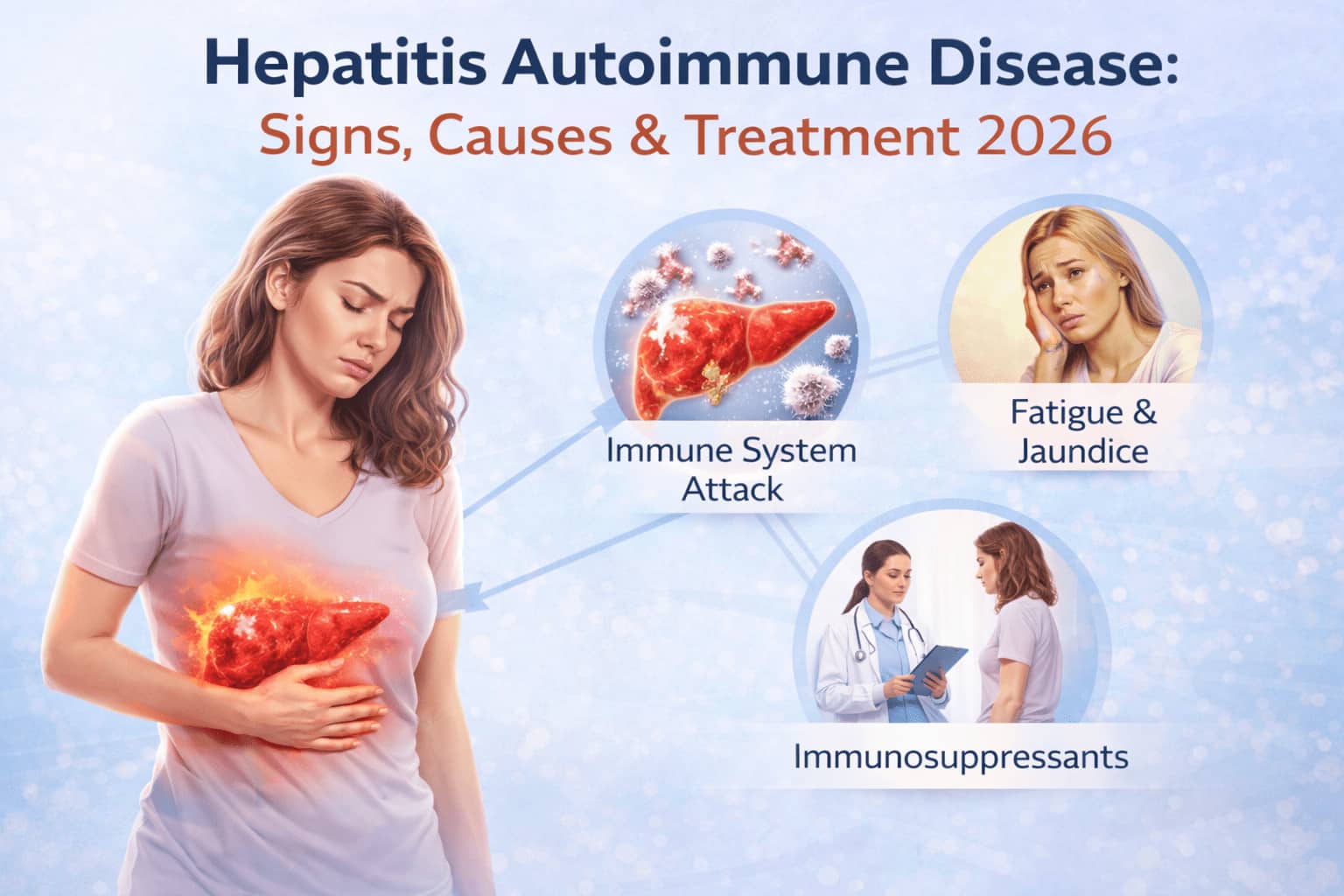
The terms hepatitis autoimmune disorder and hepatitis autoimmune disease are used interchangeably in clinical practice and patient literature. There is no meaningful clinical distinction between them — both refer to the same condition: autoimmune hepatitis (AIH).
The difference is simply a matter of language preference. “Disease” implies a more fixed pathological entity, while “disorder” is sometimes used to emphasize the functional dysregulation of the immune system. For search and communication purposes, both terms are correct and used in practice.
Practical Steps You Can Take Right Now
If you suspect either condition — or you’ve been recently diagnosed — here’s what genuinely matters:
For Autoimmune Hepatitis
- Work with a hepatologist (liver specialist) — not just a GP — for diagnosis and treatment decisions.
- Never stop immunosuppressant medication without medical supervision.
- Get regular bone density scans if on long-term corticosteroids.
- Avoid hepatotoxic substances including alcohol, high-dose paracetamol, and unreliable herbal supplements.
- Get screened for other autoimmune conditions — they commonly co-occur with AIH.
For Non-Alcoholic Fatty Liver Disease
- Start with an ultrasound and full metabolic blood panel if you have risk factors.
- Focus on sustainable dietary changes, not crash diets — rapid weight loss can paradoxically worsen liver inflammation in some cases.
- Get a HbA1c test to understand your blood sugar control.
- Discuss vitamin E and omega-3 supplementation with your doctor — both have some evidence for NAFLD support, though not universally recommended.
- Use weight management strategies that are evidence-based and sustainable. Our guide on weight management approaches Internal covers scientifically supported options.
It’s also worth understanding how micronutrient status affects metabolic health and liver function. Magnesium, in particular, plays a role in insulin sensitivity and metabolic regulation — both critical in NAFLD. Read more about the signs of magnesium deficiency Internal and how it connects to your metabolic health.
What the Research and Medical Guidelines Say
Both conditions are well-recognized in international medical guidelines. The European Association for the Study of the Liver (EASL) and the American Association for the Study of Liver Diseases (AASLD) have published detailed clinical practice guidelines for both autoimmune hepatitis and NAFLD. These guidelines form the basis of current standard-of-care recommendations worldwide.
For autoimmune hepatitis, the EASL guidelines recommend lifelong treatment monitoring with regular liver function and autoantibody testing in all patients, not just those in remission.
For NAFLD and NASH, the AASLD’s clinical guidance, available through AASLD’s published practice guidance, emphasizes lifestyle modification as the primary intervention while acknowledging the emerging pharmacological pipeline.
Frequently Asked Questions
Not in the traditional sense. Autoimmune hepatitis can be brought into remission with immunosuppressive treatment, and the liver can recover substantially if caught early. However, most patients require lifelong medication. A small number achieve sustained remission after years of treatment, but stopping medication often leads to relapse. “Managed well” is a more accurate goal than “cured.”
Yes — in its early stages, NAFLD is often fully reversible. Simple steatosis can resolve completely with weight loss, dietary improvement, and increased physical activity. Even NASH can see meaningful regression. However, once significant fibrosis or cirrhosis has developed, reversal becomes limited, though progression can still be slowed or stopped.
The key markers include elevated ALT and AST (liver enzymes), raised IgG (immunoglobulin G), and positive autoantibodies — specifically ANA, ASMA, or anti-LKM1 depending on the type. Elevated IgG combined with positive autoantibodies and characteristic biopsy findings is highly suggestive of AIH. A scoring system is used to assess diagnostic certainty.
The Mediterranean diet has the strongest evidence for NAFLD. It emphasizes vegetables, fruits, whole grains, legumes, fish, olive oil, and nuts — while limiting red meat, refined carbohydrates, and added sugars. Specifically, reducing fructose and ultra-processed foods is important. Avoiding alcohol entirely is also strongly recommended.
Yes — both conditions can cause elevated ALT and AST. This is one reason misdiagnosis or delayed diagnosis can occur. NAFLD tends to show milder enzyme elevations (often 2–3× the upper limit), while autoimmune hepatitis can cause dramatic elevations. However, overlap occurs, and additional testing (autoantibodies, imaging, biopsy) is essential to distinguish them.
There is a genetic component — certain HLA gene variants are associated with increased susceptibility. However, AIH is not directly inherited in a simple pattern. Having a family member with AIH or another autoimmune disease does modestly increase your risk. Environmental triggers are also thought to play a role in activating the immune response in genetically susceptible individuals.
In simple fatty liver, most people have no pain at all. Some people notice a dull, heavy sensation or mild ache in the upper right abdomen, which is where the liver sits. This can worsen in NASH or with an enlarged liver. Significant pain is more likely in advanced disease or if another condition is present. Fatigue is more commonly reported than pain in early NAFLD.
Conclusion: Know Your Liver, Know Your Options
Both hepatitis autoimmune disease and non-alcoholic fatty liver disease are serious but manageable conditions — when caught at the right time and treated appropriately. The key takeaway is this: they look similar on the surface, but require completely different approaches.
Autoimmune hepatitis demands early immunosuppressive therapy and lifelong monitoring. NAFLD responds powerfully to metabolic and lifestyle interventions — especially in its early stages. In both cases, doing nothing is the worst option.
If you haven’t had your liver function tested recently — especially if you have metabolic risk factors or unexplained fatigue — talk to your doctor. A basic blood panel and abdominal ultrasound can give you answers that change the trajectory of your health. Your liver doesn’t have a voice. Give it one.
For more evidence-based health guides on metabolic health, gut function, and supplement science, visit HealthMetricLab.com.
About The Author
