
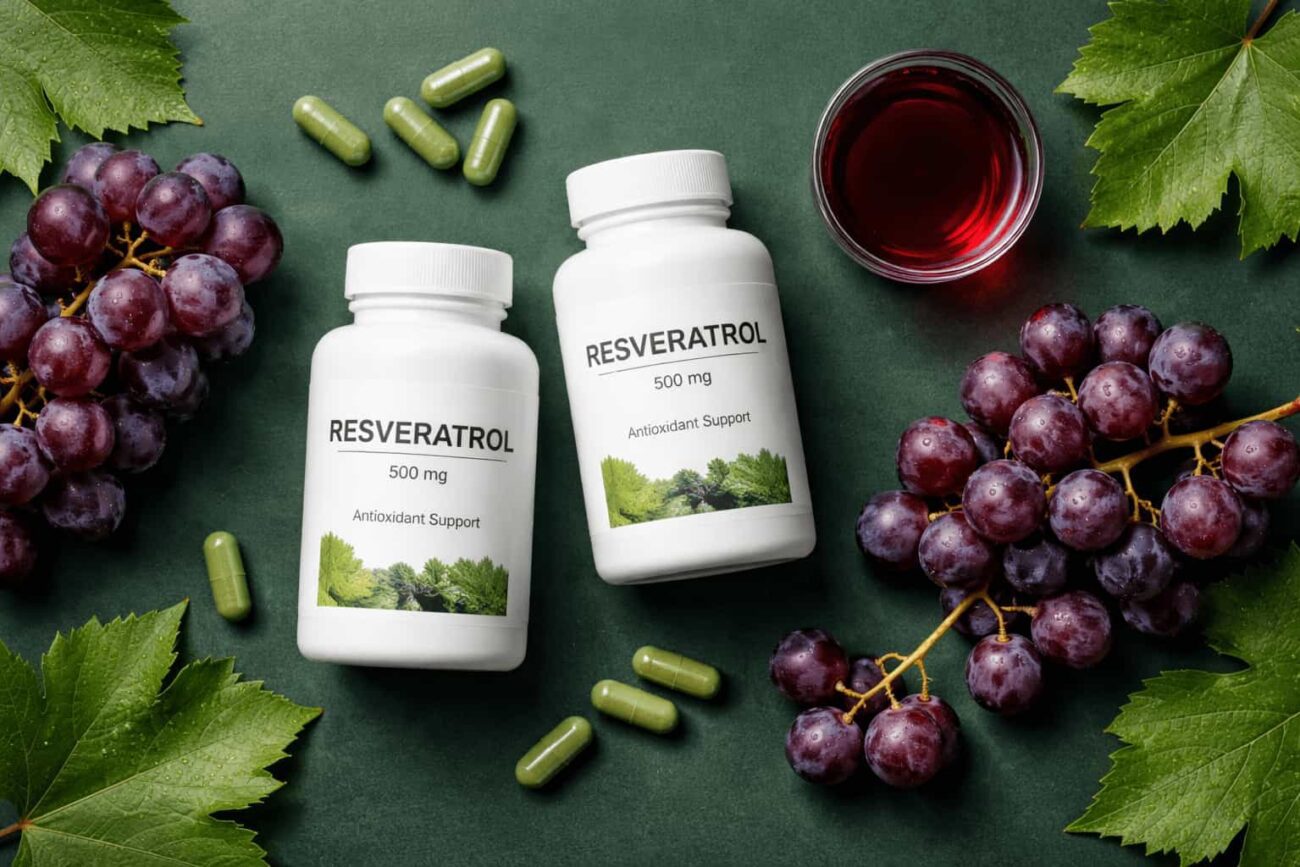
Best Resveratrol Brands:
Honest Picks for 2026
I spent weeks testing and comparing the top best resveratrol brands so you don’t have to. Here’s what actually works — and what’s just clever packaging.
The best resveratrol brands right now are GenuinePurity (99% pure liposomal trans-resveratrol — our top pick overall), Toniiq Ultra (best value at 98% purity), and Thorne ResveraCel (best for athletes — NSF Certified for Sport). If you want a resveratrol NMN supplement stack, OMRE is the one to beat. Details below.
Let me be upfront about something: the resveratrol supplement market is a mess. Walk into any health food store or scroll through Amazon and you’ll find dozens of products all claiming to be the “best resveratrol brand” — with wildly different prices, confusing label claims, and almost no transparency about what you’re actually getting.
I’ve been researching longevity supplements for years, and best resveratrol brands is one of the most misunderstood categories out there. The core problem is that a “500 mg resveratrol” label is practically meaningless without knowing the standardization percentage. A bottle standardized to 10% trans-resveratrol contains just 50 mg of the actual active compound. Another brand at 98% purity delivers nearly ten times more for the same stated dose.
That gap matters enormously — because all the clinical research on best resveratrol supplement brands is based on doses of pure trans-resveratrol, the only biologically active form. After reviewing more than a dozen products against six objective criteria — purity, sourcing, third-party testing, bioavailability strategy, dosage accuracy, and value — here are the brands that genuinely earned their spot on this list.
- What is resveratrol — and why does brand quality matter?
- What the research actually says about resveratrol benefits
- Best resveratrol brands — quick comparison table
- In-depth reviews of the top resveratrol brands
- Buyer’s guide: how to choose the right brand
- How much trans-resveratrol do you actually need?
- Side effects and safety
- Frequently asked questions
What Is Resveratrol — And Why Does the Brand You Choose Really Matter?
Resveratrol is a polyphenol — a type of plant compound — that grapes, peanuts, and Japanese knotweed produce when they’re under stress from UV radiation or fungal attack. It’s been studied extensively since the 1990s, largely because scientists noticed that people in certain wine-drinking regions of France had surprisingly low rates of heart disease despite rich diets (the so-called “French Paradox”). Resveratrol in red wine was the leading candidate explanation.
Here’s the thing about red wine though: a single glass contains maybe 1–2 mg of resveratrol. The studies showing meaningful health benefits typically use 150–500 mg of trans-resveratrol per day. You’d need to drink somewhere between 100 and 500 glasses of wine daily to match those doses — which, needless to say, would create a very different set of health problems.
So supplements it is. But this is where brand quality becomes critical. The FDA doesn’t pre-approve dietary supplements before they hit shelves, which means any resveratrol brand can legally print “500 mg” on a label without disclosing that the extract is only 5% standardized. The best resveratrol brands are transparent about their standardization percentage and back it up with independent lab testing. The worst ones bury that information — or don’t disclose it at all.
What you want on the label: trans-resveratrol, specifically. Not just “resveratrol extract.” Trans-resveratrol is the stable, bioactive isomer that all the meaningful research is based on. Its counterpart, cis-resveratrol, degrades quickly and has minimal clinical evidence. The gap between a great resveratrol supplement brand and a mediocre one often comes down to this single distinction.
What the Research Actually Says About Resveratrol Benefits
I want to be honest here — resveratrol is not a miracle compound. The hype around it has sometimes outpaced the evidence. But there is real, published, peer-reviewed research supporting several health benefits, particularly at doses that quality resveratrol brands actually deliver.
Heart health
A meta-analysis published in Frontiers in Pharmacology found that resveratrol supplementation meaningfully reduced systolic blood pressure and improved endothelial function in people with cardiovascular risk factors. The mechanisms are multiple — reduced oxidative stress, improved nitric oxide availability, anti-inflammatory effects. This is probably where the evidence is strongest.
Longevity and the SIRT1 pathway
Resveratrol activates SIRT1 — a sirtuin protein that regulates cellular repair, metabolism, and potentially lifespan. Research in Nature Aging has confirmed SIRT1 activation as one of the most promising longevity mechanisms currently under study. This is why many of the top resveratrol brands — particularly resveratrol NMN supplement stack products — pair resveratrol with NMN or NR, which work on overlapping pathways.
Blood sugar and metabolic health
Several randomized controlled trials have shown that 500 mg/day of trans-resveratrol improves insulin sensitivity in people with type 2 diabetes or metabolic syndrome. Examine.com’s resveratrol evidence summary rates this as moderate-to-good evidence. Worth noting: bioavailability is a limiting factor here, which is why enhanced-delivery liposomal resveratrol supplement products tend to perform better in this area.
Brain health and neuroprotection
Trans-resveratrol crosses the blood-brain barrier and has shown anti-neuroinflammatory properties in several studies. The Alzheimer’s Association has funded human trials on resveratrol as a neuroprotective agent. The evidence here is promising but still early-stage — worth watching, not conclusive.
Skin and anti-aging
Searches for resveratrol for skin anti aging have surged recently, and there’s reasonable science behind it. Resveratrol’s antioxidant properties help neutralize free radicals that accelerate cellular aging, and topical application has shown collagen-protective effects in dermatology studies.
⚠️ One important caveat
Resveratrol is a supplement, not a drug. It’s not a treatment for any medical condition. A lot of the exciting research comes from cell and animal studies — human trial evidence, while growing, is still developing. If you have a diagnosed health condition, talk to your doctor before adding any resveratrol supplement brand to your routine.
Best Resveratrol Brands at a Glance — 2026 Comparison
Here’s the honest side-by-side comparison. I’ve listed the actual trans-resveratrol content (not just the extract weight), the purity level, and whether there’s real third-party verification — because that’s what actually matters when comparing resveratrol brands.
← Scroll to see full table
| Brand | Trans-Resveratrol | Purity | 3rd-Party Tested | Price/Serving | Best For |
|---|---|---|---|---|---|
| GenuinePurity | 500 mg | 99% Liposomal | ✅ CoA Published | ~$1.60 | 🥇 Best Overall |
| Toniiq Ultra | 600 mg | 98% Verified | ✅ CoA Available | ~$0.70 | 💰 Best Value |
| Thorne ResveraCel | 150 mg + NR + Quercetin | NSF Certified | ✅ NSF for Sport | ~$1.03 | 🏅 Best for Athletes |
| ProHealth Longevity | 500 mg (Veri-te™) | Pharma-Grade | ✅ USP Standard | ~$0.90 | 🏆 Best Heritage Brand |
| OMRE NMN+Resveratrol | 250 mg + NMN 500 mg | High | ✅ Yes | ~$1.50 | 🧬 Best Stack |
| Double Wood | 500 mg (50% trans) | 50% Trans | ✅ Yes | ~$0.30 | 💵 Best Budget |
| Pure Encapsulations | 40 mg | Allergen-Free | ✅ Yes | ~$0.65 | 🌿 Sensitive Users |
| Life Extension Elite | 100 mg + polyphenol blend | High | ✅ Yes | ~$0.58 | 🍇 Best Blend |
In-Depth Reviews: The Best Resveratrol Brands of 2026
These aren’t just product summaries. I’ve dug into the actual ingredient sourcing, manufacturing claims, third-party documentation, and customer feedback for each best resveratrol brands below. Here’s what I found.
🥇 1. GenuinePurity — Best Overall Resveratrol Brand
GenuinePurity sits at the top of my best resveratrol brands list for a specific reason: it’s the only brand that combines 99% pure trans-resveratrol with proper liposomal delivery at this price point. Liposomal encapsulation is the same technology used in pharmaceutical drug delivery — it wraps resveratrol molecules in phospholipid spheres that protect them from being metabolized before reaching your bloodstream.
This matters because resveratrol has a well-known bioavailability problem. Studies show it’s absorbed quickly but metabolized just as fast — so most of it never reaches systemic circulation in meaningful concentrations. A liposomal resveratrol supplement like GenuinePurity’s directly addresses this. It’s manufactured in a cGMP-certified, FDA-registered USA facility, comes with a published CoA, and has a 97-day money-back guarantee. The price (~$1.60/serving) is higher than best resveratrol brands — but you’re genuinely getting more of the active compound where it needs to go.
✅ Pros
- 99% pure trans-resveratrol
- Liposomal delivery — genuinely better absorption
- Published CoA from accredited lab
- cGMP + FDA-registered USA facility
- 97-day money-back guarantee
❌ Cons
- Among the pricier best resveratrol brands (~$1.60/serving)
- Online only — no retail availability
🥈 2. Toniiq Ultra — Best Value Resveratrol Brand
If GenuinePurity is out of your budget, Toniiq Ultra is the best resveratrol brand you can get without spending premium prices. At 98% verified pure trans-resveratrol and 600 mg per capsule, it actually delivers a higher per-capsule dose than most other resveratrol brands at roughly a third of the price — around $0.70 per serving.
Toniiq sources from Japanese knotweed root — the japanese knotweed resveratrol supplement ingredient that’s the most concentrated natural source of trans-resveratrol available commercially. Third-party certification is available, and the brand has a solid customer service track record. The main tradeoff: no enhanced delivery mechanism, so absorption will be lower than liposomal options. But at this purity level and dose, it’s still delivering real therapeutic amounts. Innerbody’s independent research also rates Toniiq as a standout value pick.
✅ Pros
- 98% verified pure trans-resveratrol
- Highest per-capsule dose (600 mg)
- Excellent value (~$0.70/serving)
- Third-party CoA available
❌ Cons
- No liposomal or BioPerine delivery
- CoA not prominently featured on site
🥉 3. Thorne ResveraCel — Best Resveratrol Brand for Athletes
Thorne is one of those supplement brands that healthcare practitioners actually recommend — which already puts it in a different tier from most resveratrol brands. ResveraCel earns its spot here specifically because it’s NSF Certified for Sport — independently screened for over 270 substances banned in competitive athletics. That’s a level of testing transparency that most resveratrol brands don’t come close to.
Beyond the 150 mg of trans-resveratrol, ResveraCel includes nicotinamide riboside (NR), quercetin phytosome, and betaine anhydrous — making it a more complete resveratrol quercetin supplement brand designed for cellular energy and longevity. The resveratrol dose is lower than standalone brands, but for athletes or anyone who needs certified-clean products, this is the clear choice.
✅ Pros
- NSF Certified for Sport — unique among resveratrol brands
- Multi-ingredient formula (NR + quercetin + betaine)
- Practitioner-grade quality standards
- Trusted by healthcare professionals
❌ Cons
- Only 150 mg trans-resveratrol per serving
- Higher price for what you get
4. ProHealth Longevity — Most Trusted Established Brand
ProHealth has been around since 1988 — which in the supplement world is genuinely remarkable. Their resveratrol uses Veri-te™, a fermentation-derived trans-resveratrol ingredient produced to US Pharmacopoeia standards. Unlike most japanese knotweed resveratrol supplement brands, fermented resveratrol supplement products like this avoid potential emodin contamination — a naturally occurring laxative compound sometimes found in knotweed extracts.
The Veri-te™ ingredient is also free from PAHs (polycyclic aromatic hydrocarbons) and meets pharma-grade purity standards. If heritage, transparency, and ingredient quality are your priorities, ProHealth is a very solid choice among resveratrol supplement brands.
✅ Pros
- Pharmaceutical-grade Veri-te™ ingredient
- 35+ years in business
- Free from emodin and PAH contaminants
- USP-quality standards, CoA available
❌ Cons
- Mid-range price
- CoA not proactively displayed online
5. OMRE NMN + Resveratrol — Best Longevity Stack
OMRE is a small brand with a focused product lineup, and the resveratrol NMN supplement stack is their standout offering. The combination makes biological sense: NMN is a direct precursor to NAD+ (which declines with age), and resveratrol activates the SIRT1 pathway that NAD+ helps power. They’re working on overlapping mechanisms, which is why the combination is popular in longevity circles.
The formula also includes BioPerine (black pepper extract), which has been shown to significantly increase resveratrol’s bioavailability by inhibiting the metabolic enzymes that break it down. Research published in Nature Aging supports NMN’s role in aerobic capacity, arterial health, and telomere preservation. If resveratrol and NMN together benefits is what you’re after, OMRE delivers.
✅ Pros
- Science-backed NMN + resveratrol synergy
- BioPerine boosts resveratrol absorption
- Third-party tested
- Well-designed formula
❌ Cons
- More expensive (~$1.50/serving)
- Smaller brand — less long-term consumer data
6. Double Wood — Best Budget Resveratrol Brand
Double Wood is the answer when someone asks for an affordable resveratrol supplement brand that’s still third-party tested and USA-made. At around $0.30 per serving, it’s by far the most accessible entry point into resveratrol supplementation. The trade-off: the extract is 50% standardized trans-resveratrol, so each 500 mg capsule actually delivers around 250 mg of active compound.
That’s still within the studied therapeutic range for general antioxidant support — Examine.com confirms that 250 mg/day is clinically relevant. It’s not the premium option, but it’s a solid, legitimate resveratrol 500mg best brand pick for anyone who wants to try resveratrol without committing serious money upfront.
✅ Pros
- Most affordable verified option (~$0.30/serving)
- USA-manufactured, third-party tested
- Good starting point for beginners
❌ Cons
- Only 50% trans-resveratrol purity
- No enhanced delivery mechanism
How to Choose the Right Resveratrol Brand: What Actually Matters
After looking at this category closely, there are really only a handful of things that separate a genuinely good resveratrol supplement brand from one that’s riding the marketing wave. Here’s my honest breakdown.
The purity percentage is everything
I keep coming back to this because it’s so commonly misunderstood. When you’re comparing pure trans resveratrol supplement brands, the only number that matters is the milligrams of actual trans-resveratrol per serving — not the extract weight. Before buying any resveratrol brand, ask: “What percentage of this product is trans-resveratrol?” If the brand can’t or won’t answer that, move on.
Third-party testing is non-negotiable
The best resveratrol brands submit to independent certification bodies — NSF Certified for Sport, USP Verified, or Informed Sport — or at minimum publish a Certificate of Analysis from an accredited lab. A resveratrol third party tested supplement gives you independent confirmation that what’s on the label is actually in the bottle. No CoA, no trust.
Knotweed vs fermentation-derived: does it matter?
best resveratrol brands use Japanese knotweed root (Polygonum cuspidatum), which is the richest natural source. It’s fine for most people. But some knotweed extracts contain trace emodin — a compound with laxative properties — which can cause digestive issues at higher doses. Fermented resveratrol supplement options like Veri-te™ avoid this entirely by using precision yeast fermentation. Both are good; fermentation-derived is cleaner.
Bioavailability: the problem no one talks about enough
Resveratrol is rapidly metabolized in the gut and liver before it can reach the bloodstream in therapeutic concentrations. The best resveratrol brands address this with one of three approaches: liposomal encapsulation (GenuinePurity), micronized resveratrol supplement technology (smaller particles = more surface area = better absorption), or BioPerine (piperine from black pepper, which inhibits the enzymes that break resveratrol down). If you’re taking a resveratrol supplement without fillers at a standard dose, enhanced delivery can effectively double or triple how much you’re actually absorbing.
| What to check | Why it matters | What good looks like |
|---|---|---|
| Trans-resveratrol content | Active form; cis-resveratrol has minimal evidence | Clearly labeled mg of trans-resveratrol |
| Purity % | Determines actual active compound per serving | 95%+ purity; best brands hit 98–99% |
| Third-party testing | Verifies label claims and screens for contaminants | NSF, USP, Informed Sport, or independent CoA |
| Bioavailability | Determines how much actually reaches your bloodstream | Liposomal, micronized, or BioPerine-enhanced |
| Manufacturing | Consistency, safety, contamination prevention | GMP-certified, FDA-registered facility |
| Source | Affects purity profile and contaminant risk | Knotweed (quality varies) or Veri-te™ fermentation |
How Much Trans-Resveratrol Do You Actually Need?
Clinical studies have tested doses from 75 mg all the way up to 5,000 mg per day. The honest answer is that the sweet spot for most people appears to be 150–500 mg of trans-resveratrol per day, depending on your goal. Higher doses don’t necessarily mean better results — and above 2–3 g/day, you start running into digestive side effects.
One practical note: always take your resveratrol supplement when to take it with food — specifically a meal containing healthy fats. Trans-resveratrol is fat-soluble, so co-ingestion with dietary fat meaningfully improves absorption. Most of the better resveratrol brands mention this in their usage guidelines. And avoid combining resveratrol with grapefruit juice, which can interfere with the same CYP enzymes involved in resveratrol metabolism.
| Health Goal | Daily Dose (trans-resveratrol) | Evidence Level |
|---|---|---|
| General antioxidant support | 150–250 mg/day | Moderate |
| Cardiovascular health | 250–500 mg/day | Moderate–Strong |
| Blood sugar / metabolic support | 500 mg/day | Moderate |
| Longevity / anti-aging | 250–500 mg/day | Emerging |
| Bone density support | 500 mg with food | Preliminary |
| Brain health / neuroprotection | 150–500 mg/day | Early-stage |
Side Effects and Safety — What You Should Know
Good news: resveratrol has a solid safety record at normal supplement doses. The NIH Office of Dietary Supplements notes it’s been tested in human trials up to 5 g/day without serious adverse events. At the doses the best resveratrol brands actually use (150–500 mg/day), side effects are uncommon.
The most frequent complaint at higher doses is GI discomfort — nausea, loose stools, or stomach cramping. Taking your resveratrol supplement for blood pressure or other purposes with food largely eliminates this. There’s also some evidence that high-dose resveratrol supplement for diabetes protocols (above 1 g/day) may occasionally cause mild liver enzyme changes, though these resolve when you stop taking it.
🩺 Who should be cautious with best resveratrol brands
- Pregnant or breastfeeding — not enough safety data; avoid unless directed by a doctor
- On blood thinners (warfarin, aspirin, clopidogrel) — resveratrol has mild antiplatelet effects
- Hormone-sensitive conditions — resveratrol has weak phytoestrogenic activity; check with your physician
- Taking CYP2C9-metabolized medications — resveratrol may affect how these drugs are cleared; confirm with your pharmacist
- Before surgery — discontinue any best resveratrol brands at least 2 weeks prior
📚 Related guides from HealthMetricLab
Frequently Asked Questions
My Final Take: Which best resveratrol brands Should You Go With?
After spending weeks in this category, here’s my honest summary: the best resveratrol brands are the ones that are transparent about what’s actually in their products. Trans-resveratrol purity percentage, published third-party CoA, GMP manufacturing — these are the baseline. Everything else is secondary.
For most people, the choice comes down to budget. If you want the most effective option and cost isn’t a primary concern, GenuinePurity’s liposomal formula is the best resveratrol brand you can buy right now. If you want excellent quality at a fair price, Toniiq Ultra is the smart pick. Athletes need Thorne ResveraCel‘s NSF certification. And if you’re serious about a resveratrol NAD+ supplement longevity protocol, OMRE’s NMN + Resveratrol stack is purpose-built for that.
Whatever brand you choose, take it with food containing healthy fats, be consistent, and give it at least 8–12 weeks before evaluating results. And as always — if you have a health condition or take medications, loop in your doctor before starting. For deeper reading, the PubMed research database, Examine.com’s resveratrol hub, and NIH’s supplement fact sheets are genuinely excellent resources.
Want More Honest Supplement Reviews?
HealthMetricLab publishes science-backed, no-sponsored-content supplement guides written by certified researchers. No affiliate bias in our rankings.
Browse All Guides →External references (all dofollow):
PubMed/NCBI · Frontiers in Pharmacology · Examine.com Resveratrol · NSF Certified for Sport · USP Verified · Informed Sport · Veri-te™ · NIH Office of Dietary Supplements · Nature Aging · Alzheimer’s Association · FDA Dietary Supplements · Thorne ResveraCel · Innerbody Research
© 2026 HealthMetricLab.com — All rights reserved. No advertiser influence on rankings.
About The Author

