
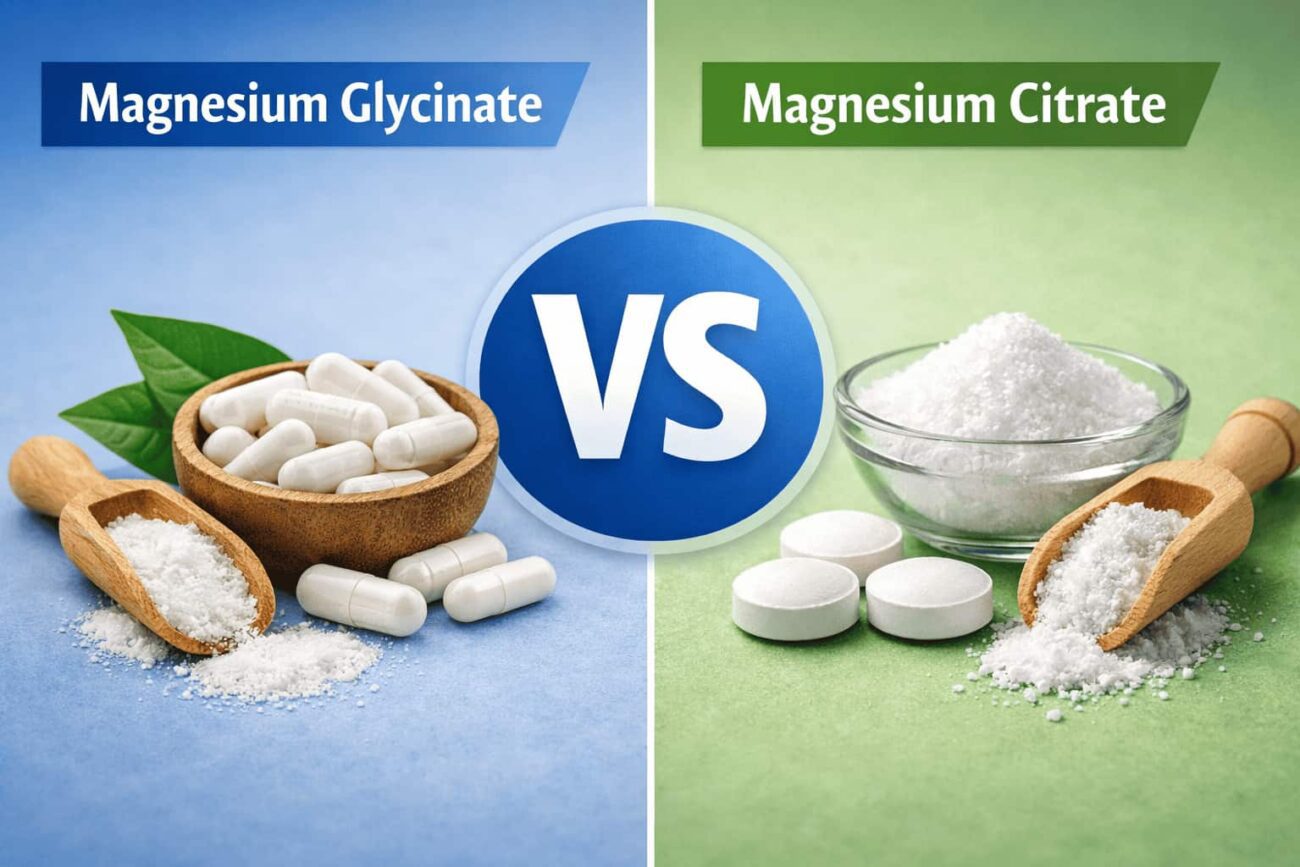
Magnesium is one of the most important minerals in the human body. It supports muscle function, nerve signaling, blood pressure regulation, sleep quality, and digestive health. Yet despite its importance, many adults do not meet their daily magnesium requirements through diet alone.
When people decide to supplement, they quickly discover that magnesium comes in multiple forms. Two of the most commonly recommended options are magnesium glycinate and magnesium citrate.
Many people try magnesium after experiencing poor sleep, muscle tension, or digestive discomfort. In practice, individuals who switch from magnesium citrate to magnesium glycinate often report improved nighttime comfort, while those using citrate for constipation notice quicker bowel response. These practical differences are why choosing the correct form matters.
When comparing magnesium glycinate vs citrate, many people assume the difference is minor. However, understanding how magnesium glycinate vs citrate affects sleep, digestion, and daily supplementation can significantly change your results.
At first glance, they seem similar. Both are well-absorbed compared to cheaper forms like magnesium oxide. Both can correct magnesium deficiency. But they behave differently in the body and serve different practical purposes.
Magnesium glycinate is often promoted for sleep, anxiety, and long-term supplementation because it is gentle on the stomach. Magnesium citrate, on the other hand, is widely used for constipation relief due to its osmotic effect in the digestive tract.
So which one is actually better?
In this evidence-based guide, we’ll break down:
- Absorption differences
- Clinical uses
- Sleep benefits
- Digestive effects
- Side effects
- Proper dosage
- Who should avoid each form
- How to choose the right supplement for your goal
By the end, you’ll have a clear, science-backed understanding of magnesium glycinate vs citrate — and which one makes sense for your health priorities.
This complete magnesium glycinate vs citrate guide will help you understand the scientific and practical differences before choosing a supplement.
1. Magnesium is involved in more than 300 biochemical reactions in the body.
Magnesium is an essential mineral involved in more than 300 biochemical reactions in the body. It plays a critical role in energy production, muscle contraction, nerve signaling, blood glucose control, and blood pressure regulation.
According to the National Institutes of Health (NIH), magnesium is required for:
- Protein synthesis
- DNA and RNA formation
- Muscle and nerve function
- Maintaining normal heart rhythm
- Bone structure support
- Regulating neurotransmitters involved in sleep
Despite its importance, studies suggest a significant portion of adults consume less magnesium than recommended. Modern diets high in processed foods, low vegetable intake, digestive disorders, chronic stress, and certain medications can all contribute to lower magnesium levels.
Mild deficiency may present as:
- Muscle cramps
- Fatigue
- Poor sleep
- Anxiety or irritability
- Constipation
More severe deficiency can affect heart rhythm and neuromuscular function.
Because magnesium is involved in relaxation pathways — including regulation of GABA (a calming neurotransmitter) — it has become increasingly popular in the sleep and wellness space.
However, not all magnesium supplements work the same way. That’s where the comparison between magnesium glycinate vs citrate becomes important.
2. Understanding Magnesium Forms (Why the Type Matters)
When you buy a magnesium supplement, you’re not buying pure elemental magnesium. Instead, magnesium is bound to another compound. This pairing affects:
- Absorption rate
- Digestive tolerance
- Laxative potential
- Clinical use
- Cost
For example:
- Magnesium oxide contains a high percentage of elemental magnesium but is poorly absorbed and more likely to cause digestive upset.
- Magnesium citrate is more bioavailable and commonly used for constipation.
- Magnesium glycinate is chelated to glycine, which may improve tolerance and provide calming effects.
This is why comparing magnesium glycinate vs citrate isn’t just marketing — the chemical structure influences how your body responds.
Another important factor is elemental magnesium. Many supplement labels list total compound weight, not the actual elemental magnesium content. Always check how much elemental magnesium you are getting per serving.
In short, the form determines the function.
Understanding magnesium basics makes the magnesium glycinate vs citrate comparison much easier to evaluate.
3. Magnesium Glycinate: Benefits, Uses, and Mechanism
Magnesium glycinate (also called magnesium bisglycinate) is a chelated form where magnesium is bound to two glycine molecules.
Glycine is an amino acid that functions as an inhibitory neurotransmitter. It plays a role in calming the nervous system and supporting sleep architecture.
Why It’s Often Recommended for Sleep
Magnesium supports:
- GABA receptor activity
- Nervous system regulation
- Muscle relaxation
Glycine, meanwhile, has been studied for its potential to improve sleep onset and subjective sleep quality.
Because of this combination, magnesium glycinate is frequently recommended for:
- Difficulty falling asleep
- Restless legs
- Nighttime muscle cramps
- Stress-related sleep disturbances
- Long-term supplementation
Another key advantage is tolerability.
Magnesium glycinate is considered one of the gentlest forms on the digestive system. It is less likely to cause diarrhea compared to magnesium citrate.
For individuals who want magnesium primarily for relaxation, anxiety reduction, or sleep optimization, glycinate is often the preferred starting point.
Absorption
Chelated forms like glycinate are generally well absorbed. While individual responses vary, many clinicians favor glycinate when sustained daily use is the goal.
4. Magnesium Citrate: Benefits, Uses, and Mechanism
Magnesium citrate is magnesium bound to citric acid. It is one of the most commonly available forms in pharmacies and supplement stores.
It is highly soluble in water and generally well absorbed. However, it has a more pronounced effect in the digestive tract.
Why It’s Used for Constipation
Magnesium citrate works through an osmotic mechanism. It pulls water into the intestines, which:
- Softens stool
- Increases bowel movement frequency
- Stimulates intestinal motility
Because of this, magnesium citrate is widely used for:
- Occasional constipation
- Short-term bowel support
- Pre-procedure bowel cleansing (in medical settings)
This laxative property can be helpful for individuals struggling with sluggish digestion.
However, for someone whose main goal is sleep improvement, the digestive stimulation may be unnecessary or uncomfortable.
Tolerability Considerations
At higher doses, magnesium citrate may cause:
- Loose stools
- Abdominal cramping
- Urgent bowel movements
For some individuals, even moderate doses can trigger digestive changes.
This is the primary practical difference when comparing magnesium glycinate vs citrate: one prioritizes nervous system calm, the other strongly influences bowel function.
Magnesium Glycinate vs Citrate: 7 Powerful Differences Explained
When comparing magnesium glycinate vs citrate, the most important differences come down to function, tolerance, and intended use.
Although both are well-absorbed forms, they behave differently inside the body.
Here’s a simplified breakdown:
| Feature | Magnesium Glycinate | Magnesium Citrate |
|---|---|---|
| Primary Use | Sleep, relaxation, long-term support | Constipation, digestive support |
| Digestive Effect | Gentle, low laxative effect | Noticeable laxative effect |
| Nervous System Impact | Calming due to glycine | Indirect calming via magnesium |
| Daily Use | Suitable for long-term use | Better for occasional use |
| Risk of Diarrhea | Low | Moderate to high |
The core difference is this:
- If your goal is relaxation and sleep, glycinate is typically more appropriate.
- If your goal is bowel movement support, citrate is more effective.
The chemical structure determines how the body processes each form. Glycinate supports calming pathways, while citrate draws water into the digestive tract.
That functional difference makes the comparison practical rather than theoretical.
6. Which Is Better for Sleep?
Sleep is one of the most common reasons people search for magnesium supplementation.
Magnesium plays a role in regulating neurotransmitters involved in sleep, including GABA. It also supports melatonin regulation and helps relax muscles.
Several small clinical studies suggest magnesium supplementation may improve sleep quality, particularly in individuals with insomnia or low magnesium levels.
https://healthmetriclab.com/magnesium-for-sleep-benefits/
When comparing magnesium glycinate vs citrate for sleep specifically, glycinate is often preferred for three reasons:
1. Lower Digestive Disruption
Sleep supplements should not interfere with digestion. Magnesium citrate’s laxative effect can disrupt comfort at night.
2. Glycine’s Calming Role
Glycine itself may promote relaxation and support sleep onset. While research is ongoing, glycine has been associated with improved subjective sleep quality in some studies.
3. Better Long-Term Tolerance
If someone plans to take magnesium nightly for sleep support, digestive comfort becomes important.
That said, magnesium citrate can still improve sleep if the individual tolerates it well and does not experience bowel changes.
But in most practical scenarios, magnesium glycinate is considered the better option for sleep support.
7. Which Is Better for Constipation?
This is where magnesium citrate clearly stands out.
Magnesium citrate works as an osmotic agent. It draws water into the intestines, increasing stool softness and bowel movement frequency.
For individuals experiencing:
- Occasional constipation
- Slow digestion
- Hard stools
Magnesium citrate is often more effective than glycinate.
Magnesium glycinate does not have a strong laxative effect. While magnesium itself can influence bowel function slightly, glycinate is not typically used for constipation relief.
However, it is important to note:
Magnesium citrate should not be relied on for chronic daily laxative use without medical supervision. Persistent constipation may signal underlying issues that require medical evaluation.
In simple terms:
- For bowel movement support → Citrate
- For sleep and relaxation → Glycinate
Magnesium citrate works by drawing water into the intestines through an osmotic effect. The Cleveland Clinic explains that magnesium citrate is commonly used for short-term constipation relief and bowel preparation.
https://my.clevelandclinic.org/health/drugs/20745-magnesium-citrate-solution
In the discussion of magnesium glycinate vs citrate for digestive health, citrate clearly has the stronger laxative effect. This remains one of the most practical distinctions in the magnesium glycinate vs citrate comparison.
8. Bioavailability: Which Form Is Absorbed Better?
Bioavailability refers to how much magnesium actually enters the bloodstream after ingestion.
Research comparing magnesium forms shows that organic salts like citrate and amino acid chelates like glycinate are generally more bioavailable than inorganic forms like magnesium oxide.
Both glycinate and citrate are considered well absorbed.
However, “better absorbed” does not automatically mean “better for your goal.”
For example:
- Magnesium citrate may raise serum magnesium effectively but also increase stool frequency.
- Magnesium glycinate may offer similar absorption with less digestive disruption.
So when evaluating magnesium glycinate vs citrate, absorption is not the only deciding factor. Tolerance and intended purpose matter just as much.
Clinical research comparing magnesium forms shows that organic salts like citrate generally demonstrate better bioavailability than inorganic forms such as magnesium oxide. A comparative analysis published in PubMed found significantly improved absorption with organic magnesium salts.
https://pubmed.ncbi.nlm.nih.gov/29679349/
Bioavailability often dominates the magnesium glycinate vs citrate debate. While both forms are well absorbed, the magnesium glycinate vs citrate choice depends more on tolerance and personal goals than absorption alone.
9. Side Effects and Safety Considerations
Magnesium is generally safe when taken within recommended limits. However, supplementation can cause side effects, particularly at higher doses.
Common Side Effects
Magnesium Glycinate:
- Mild digestive upset (rare)
- Possible drowsiness if taken during the day
Magnesium Citrate:
- Loose stools
- Diarrhea
- Abdominal cramping
These effects are dose-dependent.
Who Should Be Cautious?
Magnesium supplementation should be used carefully or avoided in:
- Individuals with kidney disease
- Those taking certain antibiotics
- People on thyroid medications
- Individuals with heart rhythm conditions
The kidneys regulate magnesium balance. If kidney function is impaired, magnesium levels can accumulate and lead to toxicity.
Symptoms of excessive magnesium may include:
- Nausea
- Low blood pressure
- Irregular heartbeat
- Muscle weakness
While this is rare in healthy individuals, it underscores the importance of proper dosing.
10. Dosage Guidelines: Understanding Elemental Magnesium
One of the most common mistakes people make when supplementing magnesium is misunderstanding the difference between compound weight and elemental magnesium.
When comparing magnesium glycinate vs citrate, what truly matters is the amount of elemental magnesium per serving.
For example:
- A capsule labeled “Magnesium Citrate 1,000 mg” does not mean you are getting 1,000 mg of magnesium.
- The label should specify how much elemental magnesium is included.
Recommended Daily Intake
According to established dietary guidelines:
- Adult men: 400–420 mg per day
- Adult women: 310–320 mg per day
This includes both dietary intake and supplements.
Typical Supplemental Doses
For sleep support (glycinate commonly used):
- 100–300 mg elemental magnesium taken 30–60 minutes before bed
For occasional constipation (citrate commonly used):
- Follow product-specific directions carefully
- Lower doses for mild relief
- Higher doses only under guidance
It’s wise to start on the lower end and increase gradually while monitoring how your body responds.
More is not always better. Excess intake increases the likelihood of digestive side effects.
From a nutritional science perspective, matching the magnesium form to the intended health outcome improves both effectiveness and tolerance.
11. Drug Interactions to Be Aware Of
Magnesium can interact with certain medications. This applies whether you are using magnesium glycinate or magnesium citrate.
Magnesium may reduce absorption of:
- Tetracycline antibiotics
- Fluoroquinolone antibiotics
- Bisphosphonates
- Levothyroxine
To reduce interaction risk, magnesium should be taken at least 2 hours apart from these medications.
Individuals taking diuretics, proton pump inhibitors, or certain heart medications should consult their healthcare provider before starting supplementation.
When in doubt, review your medication list with a qualified professional.
12. Choosing the Right Magnesium Supplement (Buyer’s Guide)
If you’re evaluating magnesium glycinate vs citrate from a purchasing perspective, here are practical criteria to use:
1. Check Elemental Magnesium
Always look for the amount of elemental magnesium per serving. This is the meaningful number.
2. Choose the Form Based on Goal
- Sleep or anxiety support → Magnesium glycinate
- Occasional constipation → Magnesium citrate
3. Look for Third-Party Testing
Reputable brands often use independent verification such as USP or NSF certification.
4. Avoid Unnecessary Additives
Some supplements include artificial colors or excess fillers. Simpler formulations are usually preferable.
5. Compare Cost per Elemental Milligram
Instead of comparing bottle price, compare how much elemental magnesium you receive per dollar.
When making a purchase decision, the magnesium glycinate vs citrate difference should guide your choice based on your primary health goal.
13. Frequently Asked Questions
1. Is magnesium glycinate better than magnesium citrate?
It depends on your goal. Magnesium glycinate is often better for sleep and long-term daily use. Magnesium citrate is typically better for constipation relief.
2. Can magnesium citrate help with sleep?
It can, since magnesium itself supports relaxation. However, the digestive stimulation may interfere with comfort at night for some individuals.
3. Does magnesium glycinate cause diarrhea?
It is less likely to cause diarrhea compared to citrate, which is why it’s commonly recommended for sensitive stomachs.
4. How long does it take for magnesium to improve sleep?
Some people notice improvement within a few days, while others may require 2–8 weeks of consistent supplementation.
5. Can I take magnesium every day?
Yes, when taken within recommended limits and in the absence of kidney disease or medication conflicts.
6. What time should I take magnesium for sleep?
Magnesium glycinate is typically taken 30–60 minutes before bedtime.
7. Is magnesium safe long term?
For most healthy adults, moderate doses are safe. Individuals with kidney impairment should avoid unsupervised supplementation.
8. Is magnesium glycinate vs citrate a major difference?
Yes, the magnesium glycinate vs citrate distinction matters because each form serves different purposes — one supports relaxation and sleep, while the other primarily supports digestion.
Medical Disclaimer:
This article is for educational purposes only and does not substitute professional medical advice. Always consult a qualified healthcare provider before starting any supplement, especially if you have medical conditions or take prescription medications.
14. The Clear Verdict: Which Magnesium Form Is Right for You?
After reviewing the science, the magnesium glycinate vs citrate decision becomes much clearer. Magnesium glycinate vs citrate is not about which form is universally better, but which form aligns with your specific health goal.
If your focus is:
- Improving sleep quality
- Reducing nighttime muscle tension
- Supporting relaxation
- Long-term supplementation
Magnesium glycinate is generally the better option due to its calming profile and lower digestive impact.
If your focus is:
- Occasional constipation
- Digestive sluggishness
- Short-term bowel support
Magnesium citrate is often more effective because of its osmotic effect in the intestines.
Both forms are well absorbed compared to cheaper alternatives like magnesium oxide. The real distinction lies in tolerability and purpose.
Choosing the right magnesium supplement becomes much easier once you match the form to your goal.
For many individuals seeking sleep optimization without digestive disruption, magnesium glycinate may be the more practical starting point.
For digestive support, magnesium citrate remains a reliable option when used appropriately.
As always, consult a healthcare professional before beginning supplementation, especially if you have existing medical conditions or take prescription medications.
Understanding magnesium glycinate vs citrate properly allows you to supplement more strategically and confidently.
References
- National Institutes of Health – Magnesium Fact Sheet
- PubMed: Comparative Bioavailability of Magnesium Salts
- Cleveland Clinic: Magnesium Citrate Uses and Safety
About The Author
