
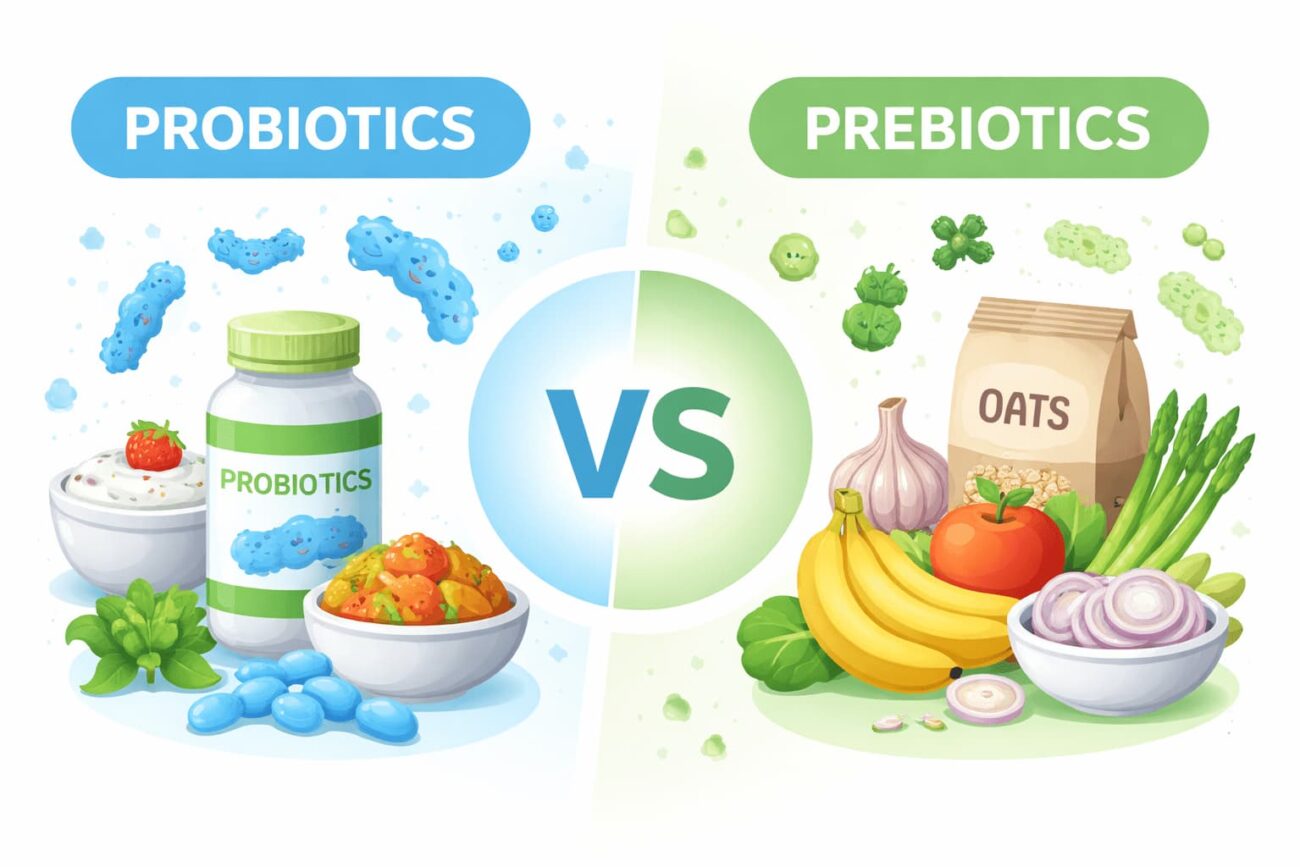
Gut health has become a major focus in modern wellness because the digestive system influences many aspects of overall health, including immunity, metabolism, and even mood. Two terms that often appear in discussions about gut health are ‘probiotics’ and ‘prebiotics’.
Although these two are closely related, they are not the same.
Probiotics are beneficial live bacteria that support the balance of the gut microbiome. Prebiotics, on the other hand, are types of dietary fiber that feed these beneficial bacteria and help them grow.
Understanding the difference between probiotics vs prebiotics can help you make better choices when selecting supplements or foods that support digestive health. When used together, they can play an important role in maintaining a balanced microbiome and improving digestion.
Research from health organisations such as the National Institutes of Health explains that probiotics may help support digestive balance and microbiome health in some individuals.
https://www.nih.gov/
In this guide, we will explore the key differences between probiotics vs prebiotics, their health benefits, how they work in the body, and whether you should take them together.
Table of Contents
This guide explains Probiotics vs Prebiotics in simple terms and helps you understand how they support gut health and digestion.
What Are Probiotics?
Probiotics are live beneficial microorganisms that help maintain a healthy balance of bacteria in the digestive system. These microorganisms are often referred to as “good bacteria” because they support digestion, nutrient absorption, and immune function.
The human digestive system contains trillions of bacteria, collectively known as the gut microbiome. When this microbiome is balanced, digestion functions efficiently and the body can absorb nutrients properly. However, factors such as poor diet, stress, illness, and antibiotic use can disrupt this balance.
This is where probiotics may help.
Probiotics introduce beneficial bacteria into the digestive system and may help restore microbial balance. Some commonly studied probiotic strains include:
- Lactobacillus
- Bifidobacterium
- Saccharomyces boulardii
These strains are commonly found in probiotic supplements as well as fermented foods.
Foods rich in probiotics include:
- Yogurt
- Kefir
- Sauerkraut
- Kimchi
- Kombucha
- Miso
Many people also take probiotic supplements to support digestive health. If you want to explore one popular option, you can read our Seed Probiotic Review, which explains how synbiotic formulas combine probiotics and prebiotics to support gut health.
Understanding Probiotics vs Prebiotics can help people choose better foods and supplements for digestive health.
What Are Prebiotics?
Prebiotics are non-digestible fibers that serve as food for beneficial bacteria living in the gut. Unlike probiotics, prebiotics are not live microorganisms. Instead, they nourish beneficial bacteria and help them grow.
When comparing Probiotics vs Prebiotics, it is important to understand that both play different but complementary roles in the gut microbiome.
When prebiotics reach the large intestine, they are fermented by gut bacteria. This process helps beneficial microbes thrive and produce compounds that support digestive health.
Common types of prebiotic fibers include:
- Inulin
- Fructooligosaccharides (FOS)
- Galactooligosaccharides (GOS)
These fibers occur naturally in many plant-based foods.
Some of the best food sources of prebiotics include:
- Garlic
- Onions
- Bananas
- Asparagus
- Oats
- Chicory root
- Apples
Because prebiotics nourish beneficial bacteria, they work closely with probiotics. When probiotics and prebiotics are combined, they form what is known as a synbiotic, which may provide stronger support for digestive health.
According to research from health organisations such as the National Institutes of Health, dietary fiber and microbiome-supporting foods may contribute to improved digestive health and metabolic balance.
https://www.nih.gov/
Probiotics vs Prebiotics: Understanding the Key Difference
Understanding the difference between probiotics vs prebiotics can help you make better choices when selecting foods or supplements for gut health.
To clearly understand Probiotics vs Prebiotics, the table below highlights their main differences.
| Feature | Probiotics | Prebiotics |
|---|---|---|
| What they are | Live beneficial bacteria | Fiber that feeds beneficial bacteria |
| Main function | Add good bacteria to the gut | Help good bacteria grow |
| Found in | Fermented foods and supplements | High-fiber plant foods |
| Examples | Yogurt, kefir, kimchi | Garlic, bananas, oats |
| Role in gut health | Restore microbial balance | Support growth of healthy bacteria |
In simple terms:
- Probiotics add beneficial bacteria to the gut.
- Prebiotics feed the beneficial bacteria already present.
Because they support gut health in different ways, many experts recommend including both probiotics and prebiotics in your diet.
People experiencing digestive discomfort sometimes explore probiotic supplements to improve gut balance. For example, certain strains may help reduce symptoms such as bloating. If this is a concern for you, you can read our guide on Best Probiotics for Bloating.
Health Benefits of Probiotics
Probiotics may provide several health benefits when consumed regularly through foods or supplements.
Understanding Probiotics vs Prebiotics helps explain how both support the growth of beneficial gut bacteria.
Support Digestive Health
Probiotics may help maintain balance in the gut microbiome, which supports normal digestion and nutrient absorption.
Improve Gut Microbiome Balance
A balanced microbiome is essential for digestive stability. Probiotics introduce beneficial bacteria that may help restore microbial diversity.
Support Immune Function
A significant portion of the immune system is connected to the digestive tract. Healthy gut bacteria may help support immune responses.
May Reduce Digestive Discomfort
Certain probiotic strains may help reduce digestive symptoms such as bloating, gas, and irregular digestion.
If you want to explore probiotic supplements designed specifically for women’s health, you may also find our guide on Best Probiotics for Women helpful.
Health Benefits of Prebiotics
Prebiotics play an important role in supporting gut health because they provide nourishment for beneficial bacteria in the digestive system. When these fibers reach the large intestine, gut bacteria ferment them and produce compounds that help maintain digestive balance.
Below are some potential health benefits associated with prebiotics.
Support Gut Microbiome Growth
Prebiotics encourage the growth and activity of beneficial bacteria in the gut. This can improve microbiome diversity, which is important for long-term digestive health.
Improve Digestion
Because prebiotic fibers support healthy gut bacteria, they may help improve digestion and promote more regular bowel movements.
Support Immune Health
A healthy gut microbiome plays a key role in immune function. Prebiotics indirectly support the immune system by encouraging the growth of beneficial bacteria.
Help Reduce Digestive Discomfort
Some individuals find that improving gut microbiome balance may help reduce digestive issues such as bloating and irregular digestion.
Health organizations such as Harvard Medical School note that dietary fiber and microbiome-supporting foods may contribute to improved digestive health.
https://www.health.harvard.edu/
Should You Take Probiotics and Prebiotics Together?
Many health experts suggest that combining probiotics and prebiotics may provide stronger digestive support than using either one alone.
The discussion around Probiotics vs Prebiotics often highlights that both work best when used together.
When probiotics and prebiotics are used together, they form what is known as a synbiotic.
In a synbiotic relationship:
- Probiotics introduce beneficial bacteria into the gut.
- Prebiotics provide food that helps those bacteria grow.
This combination may help beneficial bacteria survive longer in the digestive system and support a balanced microbiome.
Some modern supplements already combine both ingredients. For example, synbiotic formulas include probiotics along with prebiotic fibers designed to support bacterial survival.
If you want to explore a supplement that uses this approach, you can read our Seed Probiotic Review, which explains how synbiotic supplements support gut health.
Best Food Sources of Probiotics
Many fermented foods naturally contain beneficial bacteria that support digestive health.
Common probiotic foods include:
- Yogurt with live cultures
- Kefir
- Kimchi
- Sauerkraut
- Kombucha
- Miso
- Tempeh
These foods contain beneficial bacteria that may help maintain a balanced gut microbiome.
People experiencing digestive discomfort sometimes explore probiotic foods and supplements to improve gut balance. For example, probiotics are often used to support digestion and reduce symptoms such as gas or bloating. You can learn more in our guide on Best Probiotics for Bloating.
Best Food Sources of Prebiotics
Prebiotics are found in many plant-based foods that contain natural dietary fiber.
Some of the best sources of prebiotics include:
- Garlic
- Onions
- Bananas
- Oats
- Asparagus
- Apples
- Chicory root
- Leeks
These foods help nourish beneficial bacteria already present in the digestive system.
Including both probiotic foods and prebiotic foods in your diet may help maintain a balanced microbiome and support long-term digestive health.
Probiotic vs Prebiotic Supplements
Both probiotic and prebiotic supplements are available for individuals who want additional support for gut health.
Probiotic Supplements
Probiotic supplements contain live beneficial bacteria designed to introduce helpful microorganisms into the digestive system.
These supplements often contain strains such as:
- Lactobacillus
- Bifidobacterium
Probiotic supplements are commonly used to support digestive balance, microbiome health, and immune function.
Prebiotic Supplements
Prebiotic supplements typically contain fiber compounds that feed beneficial bacteria.
Common ingredients include:
- Inulin
- FOS (fructooligosaccharides)
- GOS (galactooligosaccharides)
These supplements help create an environment where beneficial bacteria can grow and thrive.
Final Thoughts: Probiotics vs Prebiotics
The comparison of Probiotics vs Prebiotics shows that both are essential for maintaining a healthy gut microbiome.
Probiotics provide beneficial bacteria that help maintain microbiome balance, while prebiotics serve as food that helps those bacteria grow and thrive.
Because they work together, consuming both probiotics and prebiotics regularly may provide stronger digestive support. This can be achieved through a balanced diet that includes fermented foods and fiber-rich plant foods, or through carefully selected supplements.
Maintaining gut health also involves healthy lifestyle habits such as a balanced diet, proper hydration, stress management, and regular physical activity.
Frequently Asked Questions
What is the difference between probiotics vs prebiotics?
The main difference is their function. Probiotics are live beneficial bacteria, while prebiotics are fibers that feed those bacteria and help them grow.
Should I take probiotics and prebiotics together?
Many experts recommend combining both because they support gut health in different ways. When taken together, they create a synbiotic effect that may improve microbiome balance.
Are probiotics better than prebiotics?
Neither is necessarily better. Probiotics and prebiotics work together, so consuming both may provide stronger digestive support.
Can probiotics help with bloating?
Some probiotic strains may help support gut microbiome balance and reduce digestive discomfort such as gas and bloating.
Are probiotics or prebiotics better for gut health?
When comparing Probiotics vs Prebiotics, both provide important benefits. Probiotics add beneficial bacteria to the gut, while prebiotics help those bacteria grow.
Medical Disclaimer
The information provided in this article is for educational and informational purposes only and should not be considered medical advice. The content is not intended to diagnose, treat, cure, or prevent any disease.
Always consult a qualified healthcare professional before starting any new supplement or making changes to your health routine, especially if you have an existing medical condition or are taking medication.
If you are exploring probiotic supplements, you may also find these related guides helpful:
Gut health is also connected to nutrients that support relaxation and digestion. For example, magnesium plays an important role in sleep and nervous system health. You can learn more in these guides:
- Best Magnesium Supplements for Sleep (2026)
- Magnesium Glycinate vs Citrate
- Best Magnesium for Anxiety
- Magnesium Dosage Guide
About The Author

